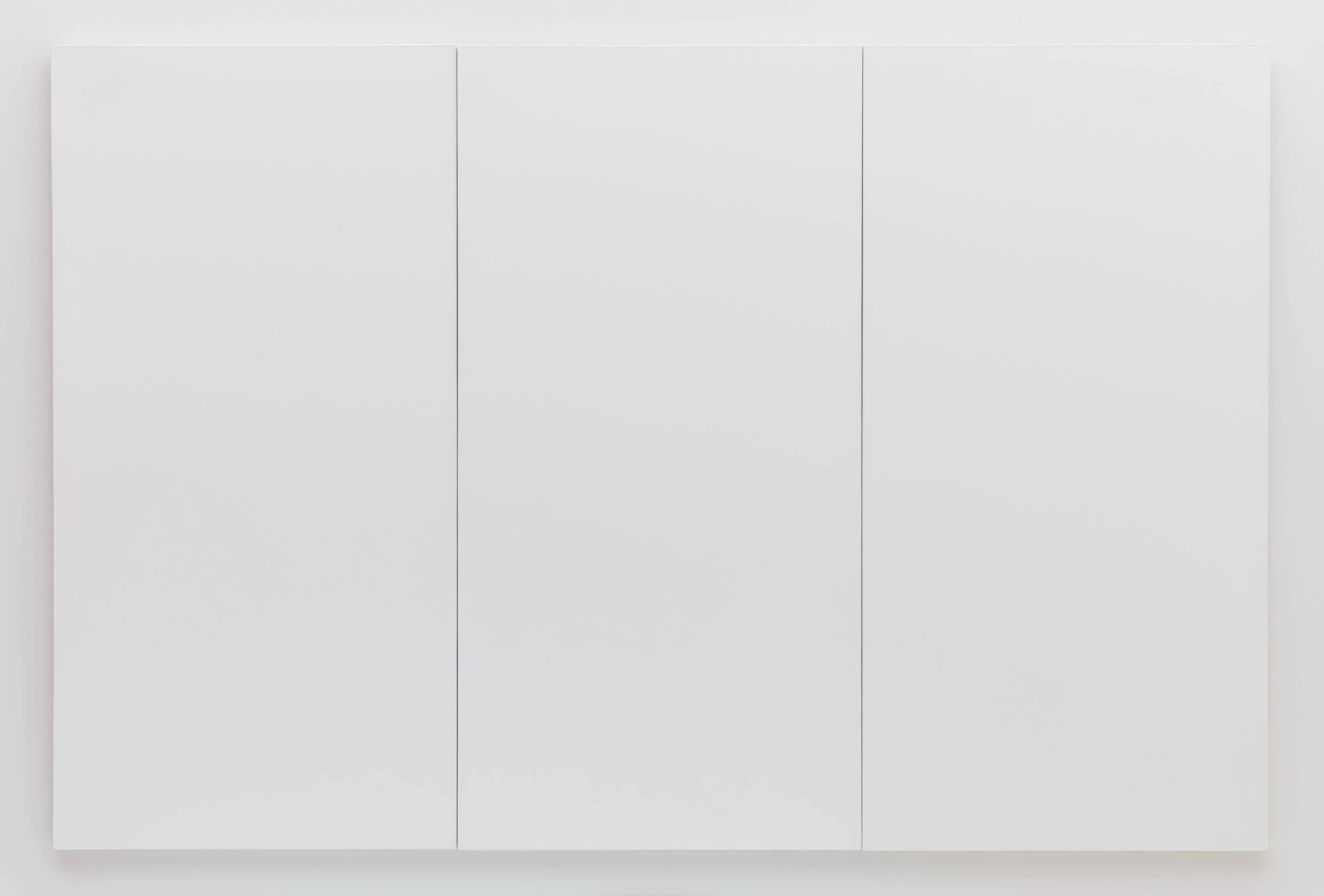
Rauschenberg's aim in creating his all-white paintings was to make works that look pure and untouched by human hands. Each of the five iterations in the series features a different number of panels and is painted a completely flat, consistent white. John Cage referred to the White Paintings as "airports for the light, shadows, and particles," establishing an understanding of the works as receptive surfaces that respond to the world around them. Cage also credited the series with emboldening him to compose his famous silent piece titled 4'33", which similarly opened musical composition to the influence of chance occurrences in the surrounding environment.